
In high-value, high-barrier-to-entry application scenarios-such as medical devices, smart grids, rail transit, and the control cores of new energy vehicles-equipment service lives spanning ten or even twenty years place nearly exacting demands on the long-term reliability of electronic components. In these fields, the failure of a single board can mean a system-wide shutdown. Traditional production quality management often relies on batch numbers for coarse-grained control; once a failure occurs, it is difficult to determine the cause at the microscopic level. By introducing the "single-board data package" management mechanism-which establishes a unique digital "birth certificate" and comprehensive lifecycle record for each circuit board-and implementing a "one board, one file" approach for granular quality analysis, we are reshaping the process control standards for high-value PCBA manufacturing.
Limitations of Traditional Batch-Level Quality Traceability and the Necessity of Individual Board Record-Keeping
In fast-paced , massive amounts of process parameters are generated every second. Historically, data storage and archiving were primarily organized by work orders, shifts, or material batches. This coarse-grained approach to data management is often ineffective when dealing with sporadic defects. In continuous production, although the overall temperature zone settings for the are constant, due to variations in the intervals between boards entering the oven, microscopic deformations in the guide rails, or dynamic fluctuations in workshop air pressure, there are subtle differences in the actual microscopic temperature curves experienced during soldering between the first board and the 100th board. If, during this period, a high-speed nozzle on the placement machine experiences slight wear due to prolonged operation, causing millisecond-level overload in the axial downward pressure, the resulting internal microcracks in the wafer are extremely difficult to detect during factory testing. When the product fails after several years of service at the end user's site, batch data alone is insufficient for precise fault localization. Ultimately, the entire batch of PCBA must be subject to a broad recall, resulting in significant financial and reputational losses for the company.

The Underlying Technical Architecture of the Single-Board Data Package and Multi-Physical-Dimension Data Capture
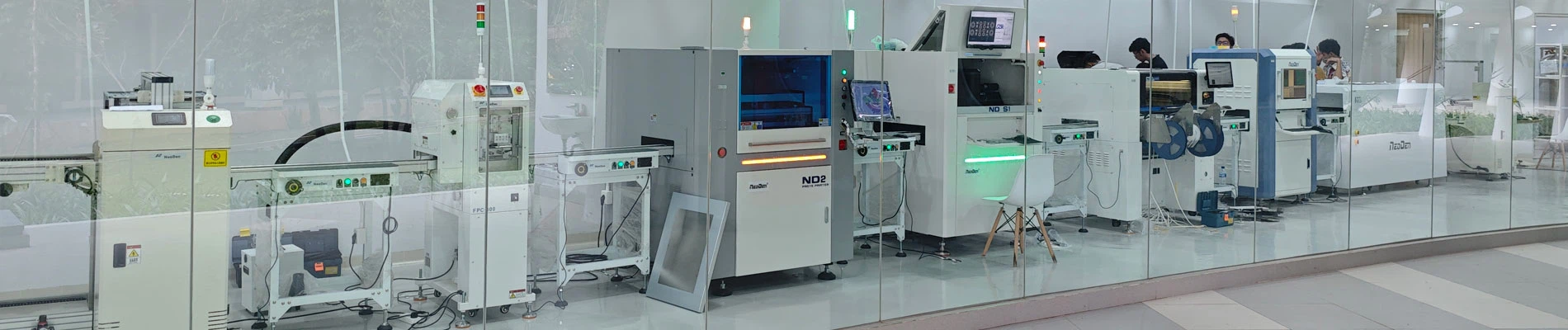
The creation of the single-board data package begins with a unique UID QR code engraved on the surface of the bare PCB by an automated laser marking machine. This character matrix serves as the central anchor for subsequent end-to-end data aggregation. Throughout the entire PCBA manufacturing process, every piece of automated hardware on the production line functions as a digital sensor. Data on the solder paste height, volume, and absolute offset values at each pad, measured by the in-line 3D solder paste inspection system; component pickup center distance offset and instantaneous peak reverse resistance of the Z-axis servo motor recorded by the 's; and pixel-level black-and-white contrast images of solder joints captured by the post-reflow -all of this data is captured in milliseconds via IPC-CFX or Hermes standard industrial IoT gateways. These disparate low-level machine language data are uploaded in real time via bus protocols to a central server and automatically organized into a digital archive under the PCB's UID.
The ultimate depth of high-value PCB data packages not only includes the physical operating parameters of production equipment but also seamlessly integrates back-end software and firmware version information with rigorous quantified electrical test metrics. When a circuit board is routed to an online or offline programming station, the firmware version barcode verification system automatically reads the unique serial number stored within the chip and injects the hash value of the currently programmed software version and the cyclic redundancy check (CRC) code back into the circuit board data package. During subsequent in-circuit testing and functional testing phases, the system moves beyond simple pass/fail logic to record absolute physical values. For example, the actual output voltage ripple of the main power rail under different load conditions, the transient rise time of critical signal paths at a high frequency of 500 MHz, and the ohm readings from impedance matching tests all generate continuous digital waveform diagrams and scatter plots. These hard-core electrical parameters, interwoven with upstream design data and manufacturing parameters, complete the digital twin simulation of the physical PCB.
The "one board, one file" digital panoramic data record has completely transformed the quality director's approach to defense and crisis management, upgrading comprehensive troubleshooting to data-driven, precise tracking. When the end market or final test bench reports a specific reverse breakdown defect in a diode on a PCBA, technicians need only scan the QR code on the board with a tablet, and the system retrieves the board's dedicated data package within seconds. Through panoramic chart analysis, process engineers can visually confirm that the solder paste volume at that location on this board during printing deviated toward the lower limit of the 30% window, and that the corresponding No. 4 nozzle experienced slight pressure overload during placement. Using these characteristic indicators, the system can instantly perform a cross-reference search within the MES database to identify 15 other boards with identical microscopic parameter characteristics, issue targeted containment alerts to implement physical interception, and minimize the scope of recalls or scrapped units to the greatest extent possible-thereby establishing an impregnable digital defense line for high-reliability assembly.
Using a digital "birth certificate" to pinpoint the physical state of every circuit board and employing comprehensive data packages to rigorously safeguard the boundaries of process quality are inevitable steps toward greater precision and rigor in modern smart manufacturing.

Zhejiang NeoDen Technology Co., Ltd. has been manufacturing and exporting various SMT equipment since 2010. Taking advantage of our own rich experienced R&D, well trained production, NeoDen wins great reputation from the world wide customers.
In our global Ecosystem, we collaborate with our best partners to deliver a more closing sales service, high professional and efficient technical support.
We believe that great people and partners make NeoDen a great company and that our commitment to Innovation, Diversity and Sustainability ensures that SMT automation is accessible to every hobbyist everywhere.
with global presence in over 130 countries, the excellent performance, high accuracy and reliability of NeoDen PNP machines make them perfect for R&D, professional prototyping and small to medium batch production. We provide professional solution of one stop SMT equipment.